
¿Qué vas a encontrar aquí?
The city hums with colour and curious corners, and a gentle stroll reveals some of the best street art stops in London. Visitors will find everything from bold, large-scale murals to tiny, clever stickers tucked under shop awnings. Each wall tells a story, and the mix of styles shows how the scene keeps evolving. Streets feel livelier here; detours often lead to delightful surprises. Locals and visitors alike tend to savour these spots, moving at a slower pace to take in the detail and the craft on every turn. Genuinely.
The urban canvas in London is generous, and spots are worth seeking out when wandering the streets. The best street art stops in London don’t shout for attention; they reward those who stop to look. Passersby will notice layers of paint where artists have replied to one another across years. There is a friendliness to the scene, a sense that the city itself allows a conversation in colour. For many, these areas provide steady inspiration and become a subject of conversation with friends.
Best street art stops in London
Around the city, certain pockets stand out as reliable places to spot quality work, and visitors often plan routes that thread through these areas. The phrase “best street art stops in London” is used here to point to neighbourhoods where creativity clusters. Such routes usually include both famous façades and quieter lanes. These places suit photographers, casual walkers, and culture-hunters alike. The surfaces here are constantly refreshed, so each visit can feel new and worth repeating. Maps and local tips make it easy to plot short routes between highlights. Still.
For those who prefer a slightly different phrase, think of these as the city’s top street art hotspots in London. This variation captures how artworks concentrate in certain lanes and squares, creating mini galleries outdoors. Even in colder months, the route stays appealing. Art can be admired from café windows or on brisk walks, making it a good match for other things to do in winter. Keep stops short and enjoy the detail.
1- Leake Street Arches (the legal graffiti tunnel)
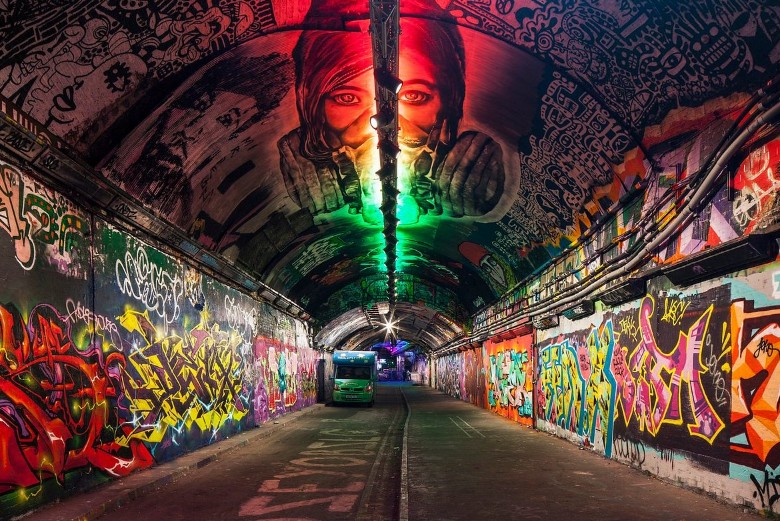
Hidden beneath Waterloo Station, Leake Street Arches is one of the most striking street art stops in London. This long tunnel stretches with colour, energy and the scent of spray paint lingering in the air. Every inch of the wall is covered in murals, messages and vibrant patterns that change almost daily. It’s one of the few legal graffiti spaces in the city, making it a constantly evolving open-air gallery. Artists from all over the world come to leave their mark, and their creations overlap in a lively clash of style and meaning.
Walking through the tunnel feels like entering a living organism that never stops breathing. Each visit offers something entirely new, as fresh layers of paint and ideas cover the old. Visitors can see everything from cartoon characters to social commentary, political slogans and intricate portraits. It’s an underground space that mirrors London’s urban creativity, where artists use concrete walls instead of canvases. The experience is sensory, raw and immersive, filled with sound, texture and light.
Beyond the artwork, Leake Street Arches has grown into a small cultural hub. Cafés, bars and event spaces now line the area, giving people a reason to linger and soak in the atmosphere. The tunnel’s combination of art and community captures London’s rebellious spirit and love for public creativity. It’s not just a place to look at graffiti; it’s a meeting point for conversation and collaboration.
At night, lights highlight the colours, giving the murals a new dimension. Locals, tourists and street photographers often gather here to capture the changing scenery. Leake Street Arches represents the heartbeat of London’s street culture—dynamic, fearless and forever unfinished. It stands as proof that art doesn’t need a frame to inspire awe or tell a story.
Address: Leake Street, London SE1 7NN.
2- Brick Lane (and surrounding side streets in Shoreditch/East London)
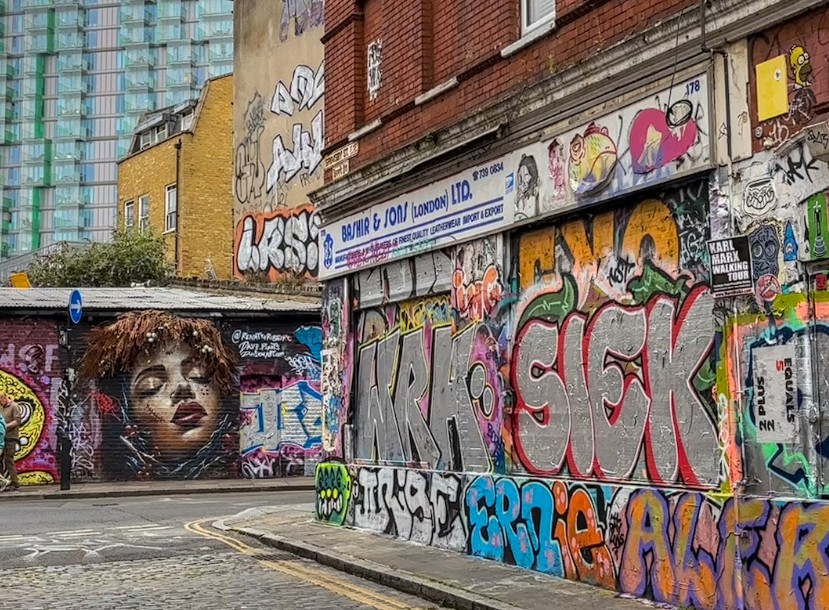
Brick Lane is one of the most famous street art stops in London, a district where creativity spills from every wall and doorway. The area’s mix of old industrial buildings and diverse cultures provides the perfect canvas for street artists. From large-scale murals to tiny stencils hidden between posters, every turn reveals something unexpected. The street buzzes with the energy of both locals and visitors, all drawn by its ever-changing art scene.
Walking down Brick Lane feels like exploring an outdoor museum without walls. The artworks tell stories about identity, politics and everyday life in East London. Artists like Banksy, ROA and Stik have left their traces here, blending humour and social commentary with bold visuals. The surrounding alleys—such as Hanbury Street and Fashion Street—extend the experience, offering fresh pieces that shift with the city’s pulse.
What makes Brick Lane truly special is how art and lifestyle intertwine. The area is home to independent galleries, markets and food stalls that reflect its multicultural roots. Street art becomes part of daily life here, not something to be admired from afar. Locals embrace it, and businesses often commission murals to decorate their façades, turning the neighbourhood into a constantly evolving exhibition.
During weekends, Brick Lane transforms into a lively hub where street performers, vintage hunters and art enthusiasts mingle. Its atmosphere captures the essence of London’s creative identity—bold, unfiltered and authentic. Every visit feels different, with new designs replacing old ones and temporary artworks vanishing overnight. Brick Lane doesn’t just display art; it lives it, making it one of the most iconic and essential street art destinations in the UK.
Address: Brick Lane, Spitalfields, London E1 6QR.
3- Zetland House mural wall, Shoreditch
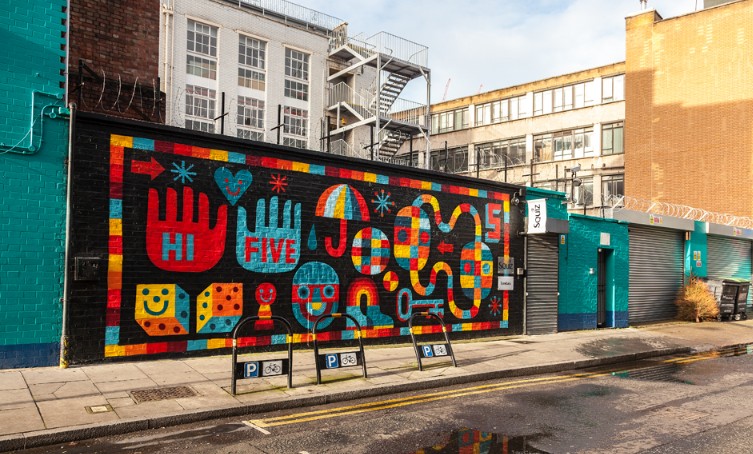
Tucked away in the heart of Shoreditch, the Zetland House mural wall stands as a quieter yet equally captivating street art stop in London. This wall has become a landmark for those who appreciate the craft and message behind urban art. The building itself, a repurposed warehouse, serves as a massive backdrop for intricate murals that often stretch several metres high. The changing artwork reflects the district’s strong connection to design, innovation and counterculture.
Unlike other spots where graffiti overlaps daily, the Zetland House wall often features curated pieces that remain for months. Artists use the space to experiment with technique and colour, transforming blank brick into vivid storytelling. You can find surreal imagery, detailed portraits and bold typographic compositions, each piece speaking to the urban rhythm of Shoreditch. The result is both refined and spontaneous—a perfect example of how street art can balance freedom and form.
Visitors to this part of London often stumble upon the mural unexpectedly. The contrast between the elegant red-brick building and the striking paintwork creates a sense of surprise and delight. It’s a reminder that art can emerge anywhere, not just within gallery walls. The site has become a favourite for photographers, creatives and locals seeking visual inspiration. It also symbolises how East London has redefined its industrial past into a hub for cultural expression.
Every few months, the wall changes hands as new artists contribute fresh perspectives. This constant renewal keeps the Zetland House mural wall alive, ensuring that no two visits are ever the same. It’s a quieter, more introspective chapter of London’s street art story—one that values detail, emotion and evolution over chaos.
Address: 5–25 Scrutton Street, Shoreditch, London EC2A 4HJ.
4- Copeland Park & Bussey Building, Peckham
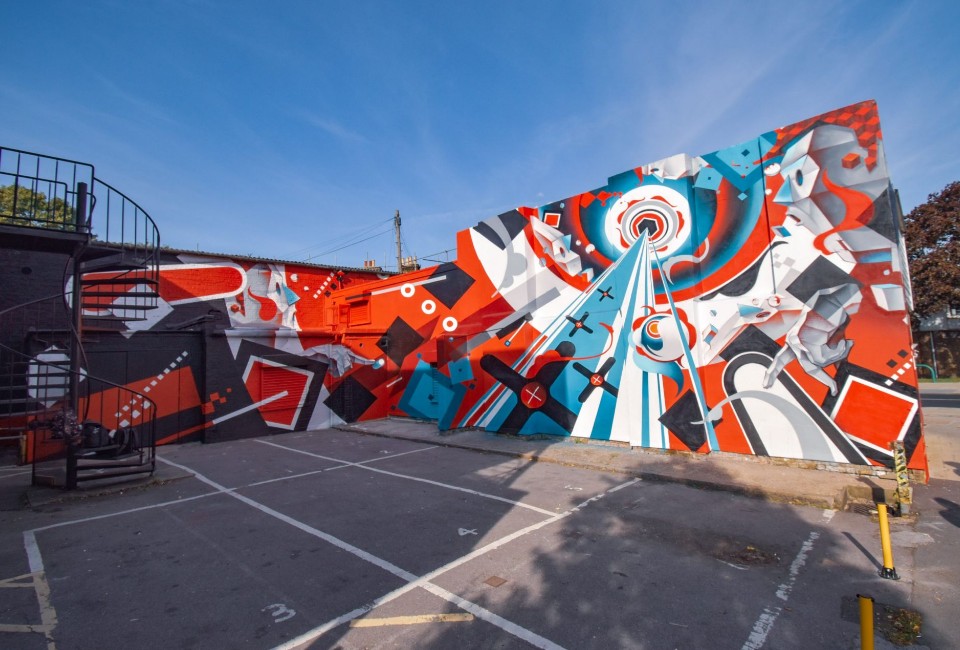
In the vibrant heart of Peckham, Copeland Park and the Bussey Building have become essential street art stops in London. The area thrives on creativity, transforming industrial structures into colourful expressions of urban life. Murals cover the walls, staircases and corners, giving the site a dynamic character that reflects South London’s artistic pulse. The contrast between the old brickwork and bold paintwork creates a raw, authentic atmosphere that’s hard to find elsewhere.
This sprawling complex hosts studios, markets and events, making art an everyday experience rather than a curated spectacle. Street artists often collaborate with local collectives, using the space as both workshop and exhibition. The artwork changes regularly, celebrating Peckham’s diversity and energy through layers of vivid imagery. Themes range from abstract patterns to social commentaries, blending seamlessly into the creative life surrounding the building.
Visitors can explore freely, discovering pieces that hide behind corners or rise unexpectedly across the façades. What makes this stop remarkable is its living, breathing connection to the community. Art here doesn’t decorate—it communicates. Each brushstroke or spray line seems to echo the voices of local artists, musicians and residents who shape the area’s identity. It’s street art not for fame, but for expression and belonging.
By evening, the site glows under neon lights, and the murals take on a different tone. The Bussey Building becomes a meeting point for art lovers, performers and those seeking inspiration. Copeland Park stands as proof that creativity flourishes where people live and share space, not just in curated galleries. It’s a genuine celebration of London’s underground art culture, alive with colour, rhythm and conversation.
Address: 133 Copeland Road, Peckham, London SE15 3SN.
5- Webheath Workshops mural, Kilburn
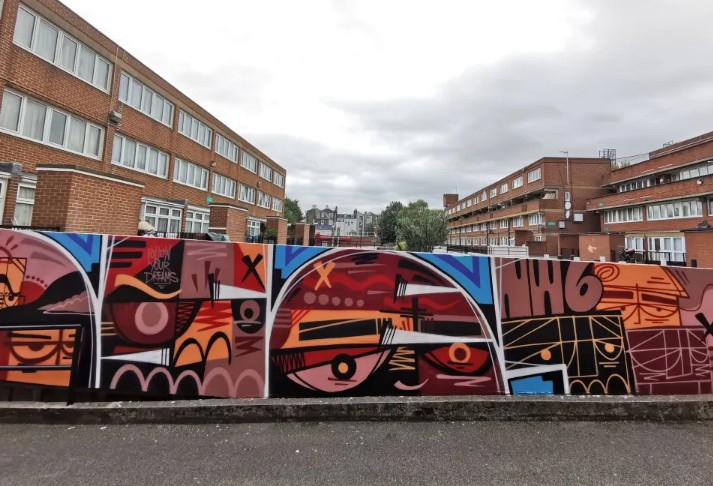
Hidden among the quiet streets of Kilburn, the Webheath Workshops mural is one of the most intriguing street art stops in London. The mural stretches across the building’s façade, merging contemporary creativity with community history. Its bright hues and textured layers create a captivating visual story that stands out against the residential surroundings. Unlike central London’s bustling art hubs, this mural offers a more reflective experience for those who seek authenticity.
The artwork often focuses on unity and diversity, drawing inspiration from the area’s multicultural roots. Each section tells a different story, yet together they form a portrait of modern urban life. Local artists frequently collaborate here, combining styles ranging from realism to geometric abstraction. The result is a piece that evolves over time, much like Kilburn itself—a neighbourhood in constant dialogue with its past and present.
Visitors who find this mural often describe it as a hidden treasure. Its setting, slightly off the main roads, gives it a sense of discovery and intimacy. The mural turns an ordinary wall into a landmark of colour and pride for the local community. Passers-by stop to photograph it, and its presence sparks conversations about the role of public art in shaping neighbourhood identity.
As sunlight shifts across the day, the colours seem to transform, offering new moods and tones. The Webheath Workshops mural captures the quieter side of London’s street art—personal, meaningful and deeply human. It’s less about spectacle and more about storytelling, showing how creativity can brighten both walls and spirits in unexpected corners of the city.
Address: 236 Webheath Workshops, Kilburn, London NW6 2JX.
6- NYX Hotel Holborn mural (by Dan Kitchener)
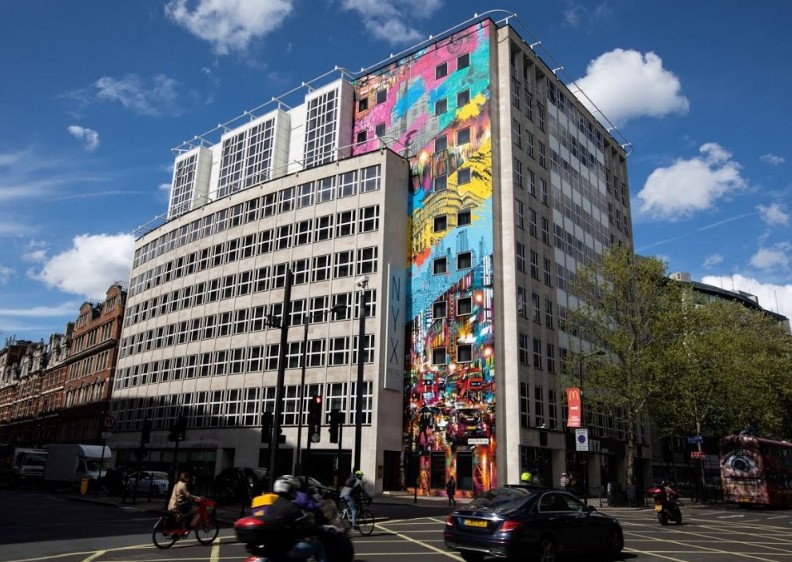
In central London, the NYX Hotel Holborn mural stands as a striking example of modern urban artistry. Painted by renowned street artist Dan Kitchener, it’s one of the most visually captivating street art stops in London. The mural’s neon tones and cinematic style transform the hotel’s exterior into a glowing scene straight out of a futuristic cityscape. With its rain-soaked reflections and bustling energy, it perfectly captures Kitchener’s signature theme—urban nights filled with light and motion.
This large-scale artwork contrasts beautifully with the elegance of Holborn’s architecture. It bridges the world of fine art and street culture, drawing attention from passers-by who often stop to admire its detail. The mural’s colour palette—deep blues, purples and radiant pinks—adds warmth to the surrounding streetscape, especially under evening lights. It’s not only a creative statement but also a symbol of how contemporary London embraces art in unexpected places.
Kitchener’s work here reflects his fascination with modern city life and human emotion. Through his use of light and shadow, he turns a blank wall into a moving story about the rhythm of urban existence. The mural invites viewers to pause amid the city’s rush and appreciate beauty in transience. Each glance reveals new textures and moods, reminding onlookers of London’s constant evolution.
At night, the mural seems almost alive, glowing with electric energy as streetlights and reflections enhance its vivid tones. The NYX Hotel Holborn mural exemplifies how street art can elevate urban design while staying accessible to everyone. It’s a masterpiece of modern London creativity—polished yet raw, elegant yet electric—proving that even in the city’s most refined districts, art finds its place on the streets.
Address: 50–60 Southampton Row, London WC1B 4AR.
7- Northington Street Wall Art
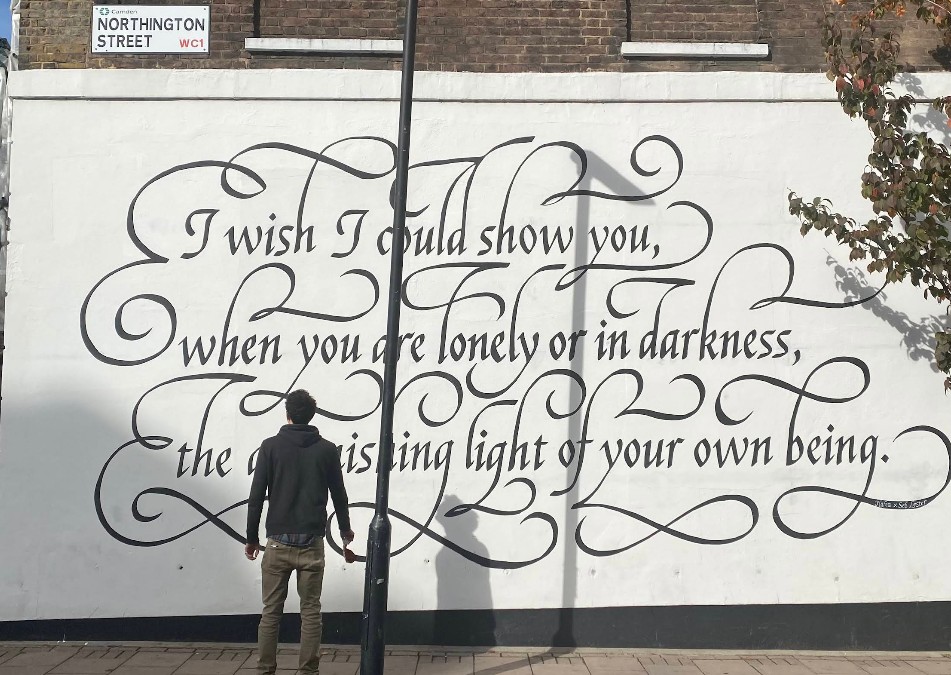
Nestled within Holborn’s quieter lanes, the Northington Street Wall Art is one of the most elegant street art stops in London. This mural transforms a simple brick façade into a celebration of craftsmanship and urban design. Unlike the chaotic energy of graffiti-filled tunnels, the artwork here radiates balance and precision. Its composition reflects the area’s architectural charm, blending fine lettering and modern forms into a timeless piece.
Created by artist Seb Lester, known for his exquisite typographic style, the mural brings sophistication to street culture. His intricate calligraphy merges classical beauty with a modern sensibility, giving the wall a poetic rhythm. Each curve and flourish of the letters invites onlookers to pause and observe. The result is a rare harmony between traditional artistry and contemporary street expression—a dialogue between elegance and rebellion.
Holborn’s mix of historic buildings and creative industries makes the mural’s setting especially meaningful. It captures London’s spirit of reinvention, where heritage meets innovation. The wall seems to echo the voices of writers, thinkers and artists who have long walked these streets. The artwork becomes more than decoration—it’s a quiet reflection on how language, art and place intertwine in the urban landscape.
Throughout the day, natural light enhances the mural’s subtle details, shifting its tones and shadows. The Northington Street Wall Art stands as a reminder that street art in London isn’t always loud—it can be contemplative, refined and deeply moving. It transforms a corner of Holborn into an open-air gallery, where simplicity and mastery combine to tell a story of creativity rooted in tradition yet open to the future.
Address: 10 John Street, Holborn, London WC1N 2EB.
8- The Blind Exit
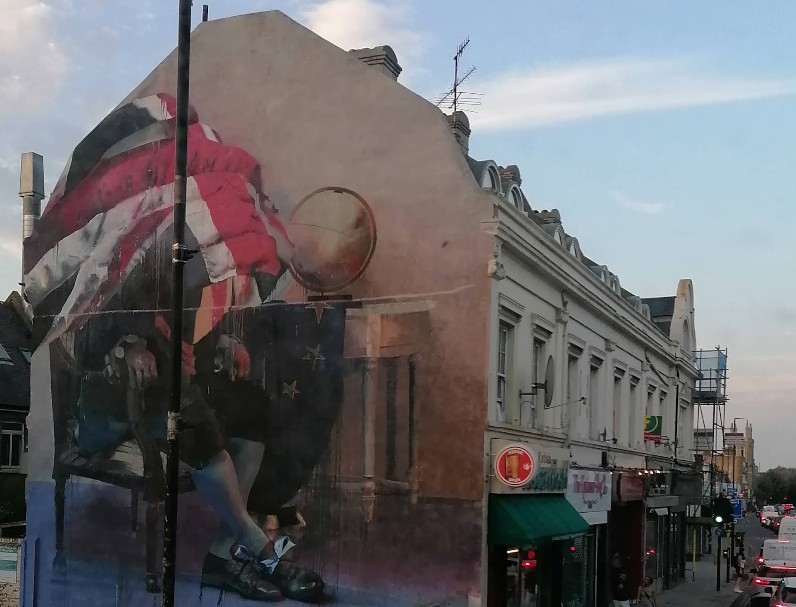
The Blind Exit, located along Greenwich’s bustling Trafalgar Road, is one of the most intriguing street art stops in London. This mural instantly draws attention with its bold colours and layered symbolism. Created by local artists, it reflects themes of escape, perspective and transformation, perfectly fitting its enigmatic title. The work adds a sense of mystery to the street, inviting passers-by to interpret its hidden meanings.
The mural’s composition is both chaotic and controlled, with sweeping lines that suggest motion and freedom. Its imagery shifts between abstraction and realism, echoing the unpredictability of urban life. The Blind Exit doesn’t present a clear narrative—it asks questions instead. Its forms seem to dissolve and reappear, encouraging viewers to see beyond the obvious and engage their imagination.
Positioned in the evolving Greenwich Peninsula, the piece also mirrors the area’s cultural diversity and regeneration. It stands as a metaphor for transition—between past and present, structure and spontaneity. Commuters and pedestrians often stop to photograph or sketch it, turning this once ordinary wall into a landmark of creative dialogue. Its presence transforms a busy road into a space for reflection amid the noise of city life.
As the light changes, the mural takes on different moods—bright and energetic by day, softer and contemplative at dusk. The Blind Exit embodies the essence of London’s street art scene: bold, intelligent and ever-evolving. It challenges viewers to look twice, reminding them that art in public spaces can be both beautiful and thought-provoking, reshaping how we see the everyday world around us.
Address: 71 Trafalgar Road, Greenwich, London SE10 9TS.
9- 1 Sherringham Ave, Tottenham
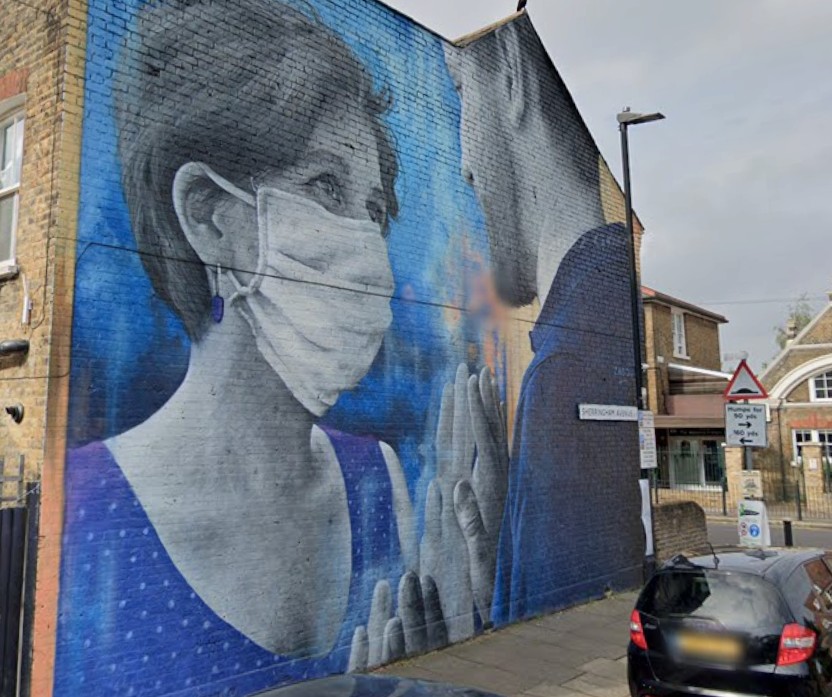
In the heart of North London, 1 Sherringham Avenue stands as one of the most expressive street art stops in London. This striking mural captures the creative pulse of Tottenham, an area known for its resilience and community spirit. The artwork stretches across the building’s exterior, combining vivid colours, bold imagery and messages of hope. It reflects the local pride that defines this diverse part of the city, turning an ordinary wall into a statement of identity.
The mural often features themes of unity, strength and transformation, echoing Tottenham’s rich cultural history. Every brushstroke seems to tell a story about the neighbourhood’s energy and evolution. The design mixes contemporary graffiti with detailed portraiture, creating a powerful contrast between chaos and harmony. Local artists frequently update sections of the wall, ensuring that the piece remains alive, relevant and connected to the voices of the community.
Visitors who pass through are often surprised by the emotional depth of the mural. It’s not just a visual attraction—it’s a mirror of everyday life in North London. The wall captures the essence of street art as storytelling, blending political commentary, personal expression and collective memory. Each detail feels intentional, inviting viewers to stop, reflect and connect with the artwork’s meaning.
As daylight shifts, the mural transforms, revealing new tones and textures that highlight its intricate design. 1 Sherringham Avenue symbolises the heart of London’s street art movement—raw, honest and full of character. It stands as proof that creativity thrives not only in central districts but also in the city’s outer boroughs, where local voices use art to celebrate identity and inspire change.
Address: 1 Sherringham Ave, Tottenham, London N17 9RA.
10- Adam’s Bridge Plaza mural, Canary Wharf
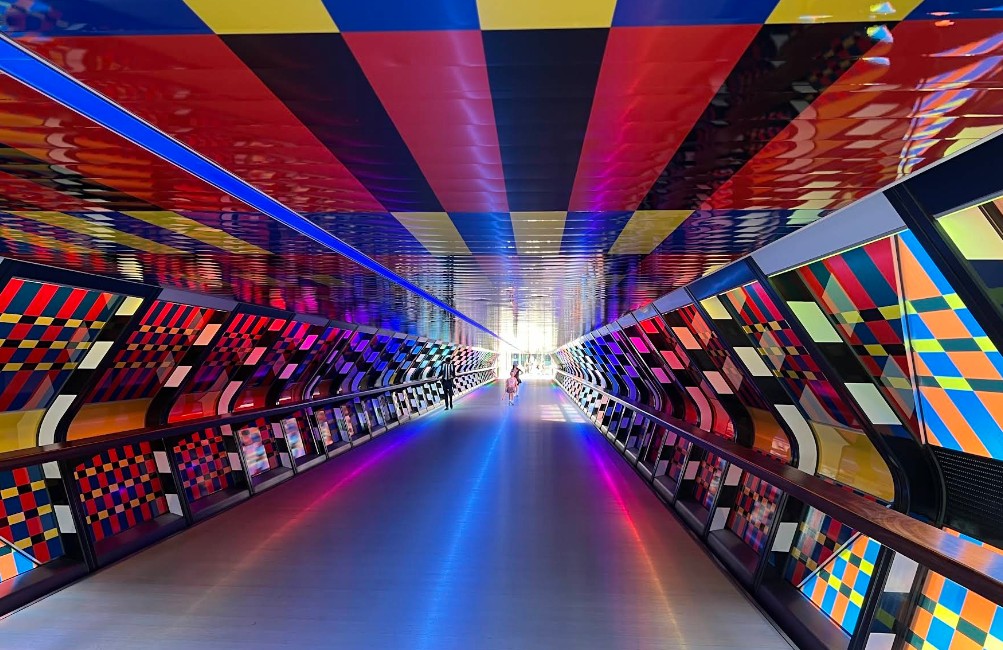
In the sleek, modern landscape of Canary Wharf, the Adam’s Bridge Plaza mural provides a surprising burst of colour and emotion. It’s one of the most unexpected street art stops in London, bringing warmth and humanity to the city’s glass and steel skyline. Surrounded by corporate buildings, the mural breaks convention with its expressive brushwork and sweeping imagery that captures the pulse of urban life. Its presence challenges the area’s polished reputation, proving that creativity can flourish even in the most structured environments.
The mural’s design reflects the contrasts of Canary Wharf—modernity meeting imagination. It combines geometric forms with fluid strokes, symbolising the flow of people, ideas and cultures through the financial district. The artwork acts as a bridge between business and art, transforming the plaza into an open-air gallery where workers, residents and visitors pause to appreciate its colour and movement. It reminds viewers that even the most formal settings can benefit from moments of artistic reflection.
During the day, sunlight enhances the mural’s reflective tones, while at night, nearby lights cast dynamic shadows that make it appear alive. The wall’s composition plays beautifully with its surroundings, offering a visual escape from the city’s monotony. Locals often see it as a symbol of renewal—proof that modern architecture can coexist with creative freedom. The juxtaposition creates an atmosphere of balance and inspiration.
In a district known for its structure and pace, this mural injects character and emotion. Adam’s Bridge Plaza stands as a beacon of contemporary street art in London, merging innovation with imagination. It represents how creativity redefines even the most commercial corners of the capital, inviting everyone to pause, look up and rediscover the beauty hidden within the city’s everyday rhythm.
Address: Adam’s Bridge Plaza, Canary Wharf, London.
Faq’s
What is the best time to explore street art spots in London?
The best time to explore street art spots in London is usually early in the morning or during weekdays when the streets are quieter. This allows you to enjoy the artwork without crowds and take better photos. The light is softer too, which highlights the details and colours of the murals beautifully.
Is it legal to take photos of street art in London?
Yes, taking photos of street art in London is generally allowed, as most of it is displayed in public spaces. However, it’s polite to respect private property and avoid trespassing on restricted areas. If the artwork is inside a private venue, always check with staff or owners before taking pictures.
How often does street art in London change?
Street art in London changes quite frequently, which is part of its charm. Some murals stay for months, while others might be replaced within days. The city’s street art scene is dynamic and ever-evolving, so each visit can bring something new and unexpected to discover.
Can I find street art tours in London?
Yes, there are many ways to learn about the art scene, from self-guided walks to expert-led tours. These experiences often share insights into the artists’ stories and the meanings behind their work. Exploring with a guide can give you a deeper understanding of London’s creative culture and graffiti heritage.
What should I bring when exploring urban art in London?
When visiting urban art areas, wear comfortable shoes and dress for the weather, as most murals are outdoors. Bring a camera or smartphone for photos and some cash if you plan to grab a coffee or souvenir nearby. A map or app can also help you navigate the best street art locations with ease.