

¿Qué vas a encontrar aquí?
London is a city where art meets architecture at every corner, and one of the most striking forms of artistic expression found throughout the capital is sculpture. From historical to contemporary, sculptures in London offer a unique window into the city’s cultural, political, and social narrative. Whether you’re exploring leafy parks or bustling urban squares, it’s impossible to miss the visual impact these works of art have on the city’s character and charm.
Many sculptures in London are more than decorative pieces—they serve as focal points for reflection, discussion, and sometimes even controversy. They reflect the city’s evolving identity and highlight how public spaces can become immersive galleries. Some are tucked away in quieter corners, offering a moment of calm, while others dominate public plazas with bold statements and intricate design. Their accessibility and diversity also make London an exceptional place for anyone interested in sculpture as an art form.
Best sculptures in London
The best sculptures in London span a wide range of styles, materials, and themes, revealing the capital’s rich artistic heritage and modern creativity. These works are often integrated into the daily lives of Londoners, subtly influencing the way people interact with their surroundings. Whether abstract or figurative, minimalist or ornate, they contribute to the visual storytelling that makes London a global cultural hub.
Many of these standout sculptures are strategically placed to enhance public engagement, offering both locals and visitors a chance to pause, observe, and interpret. They can provoke thought, stir emotions, or simply delight the eye. As permanent fixtures in the city’s landscape, they also continue to evolve in meaning over time, shaped by changing contexts and community perceptions. Moreover, their enduring presence is a testament to London’s commitment to art in the public realm.
1- Nelson’s Column
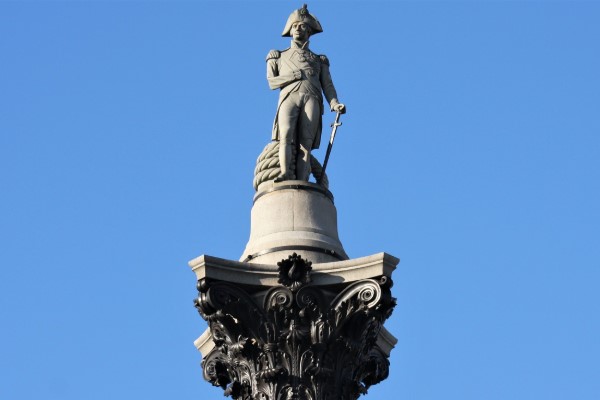
Nelson’s Column stands tall in Trafalgar Square, an iconic tribute to Admiral Horatio Nelson. This magnificent monument reaches a height of 169 feet and is topped by a striking statue of Nelson himself. The column was erected in 1843 to commemorate his bravery and leadership during pivotal naval battles, including the Battle of Trafalgar. In addition, the design was created by the renowned architect William Kent, making it not just a historical landmark but a fine example of neoclassical architecture.
At the base of the column, four bronze relief panels depict key moments from Nelson’s career. These intricate sculptures illustrate his valour and strategic brilliance, drawing visitors into the rich tapestry of naval history. Surrounding the column are fountains and the vibrant atmosphere of Trafalgar Square. As a result, it is often bustling with tourists and locals alike.
Additionally, Nelson’s Column serves as a focal point for many events and celebrations. From national commemorations to public gatherings, it has witnessed significant moments in London’s history. The square itself often comes alive with art exhibitions, music performances, and cultural events, creating a dynamic backdrop for this historical sculpture. Moreover, the juxtaposition of the column against the backdrop of the National Gallery and the lively square makes it a perfect spot for photography and reflection.
Visitors can approach the column from various angles, each offering a unique perspective. Standing at the foot of the monument, one can truly appreciate its grandeur and the artistry involved in its construction. In addition, the sight of Nelson overlooking the square instils a sense of pride and remembrance.
Address: Trafalgar Square, London WC2N 5DN.
2- Bomber Command Memorial
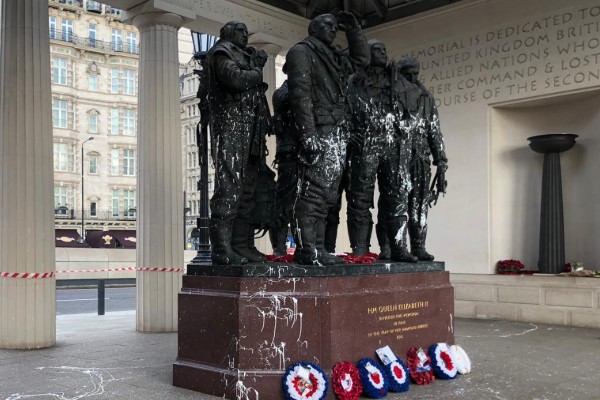
The Bomber Command Memorial is a poignant tribute to the Royal Air Force’s Bomber Command and its brave aircrew during World War II. Located in Green Park, this memorial was unveiled in 2012 and serves as a reminder of the sacrifices made in the name of freedom. The striking sculpture features a bronze statue of an aircrew member, poised in a moment of reflection, surrounded by a circular stone wall inscribed with the names of 55,573 fallen airmen.
This impressive memorial is not only a work of art but a site of remembrance. The design, created by architect Liam O’Connor, incorporates elements that evoke the bravery and resilience of the aircrew. The circular layout invites visitors to walk around and engage with the inscriptions, which tell the stories of those who served. The intimate setting encourages contemplation, making it a serene space amidst the park’s greenery.
Moreover, the Bomber Command Memorial stands as an educational resource. Informational panels detail the historical context of the Bomber Command missions, providing visitors with a deeper understanding of their significance. This aspect enriches the experience, transforming a simple visit into an enlightening journey through history. The memorial draws not only locals but also international visitors who seek to pay their respects.
Surrounding the memorial, Green Park enhances the atmosphere with its tranquil beauty. The lush greenery and vibrant flowers create a peaceful environment, perfect for quiet reflection. Visitors are encouraged to sit on the benches and take in the surroundings, allowing the weight of history to resonate. Overall, the Bomber Command Memorial is a vital sculpture in London, honouring the legacy of those who fought bravely in the skies.
Address: Green Park, London W1J 9DZ.
3- Cleopatra’s Needle
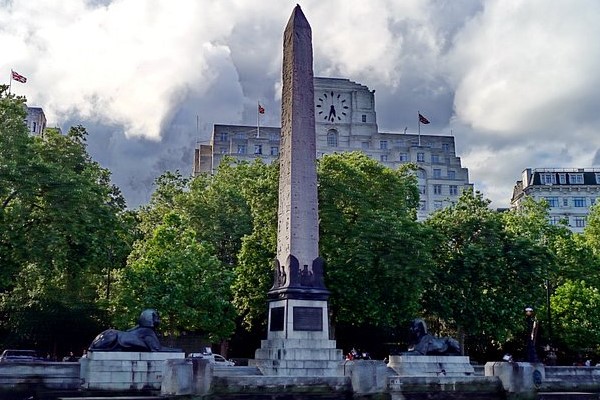
Cleopatra’s Needle is an ancient Egyptian obelisk that graces the banks of the River Thames. Standing at a towering height of 68 feet, this remarkable sculpture is over 3,500 years old and is one of three identical obelisks. Originally erected in Heliopolis, Egypt, it was gifted to Britain in the 19th century as a symbol of friendship between the two nations. The obelisk is made of red granite. It is also adorned with hieroglyphics that celebrate the reign of Pharaoh Ramses II.
Located on the Victoria Embankment, Cleopatra’s Needle is surrounded by beautifully landscaped gardens. The setting enhances the monument’s majesty, making it an attractive destination for tourists and locals alike. Visitors can walk around the obelisk, admiring its intricate carvings and the history it represents. The hieroglyphics convey messages of power and divinity, offering a glimpse into ancient civilisations.
Additionally, the obelisk is flanked by two sphinxes, adding to its grandeur. These sculptures further enhance the Egyptian theme and provide a striking contrast to the modern London backdrop. The sphinxes are intricately detailed, capturing the essence of traditional Egyptian art. Together, they create a captivating visual narrative that draws the eye and sparks curiosity about the distant past.
Cleopatra’s Needle is a testament to London’s diverse history and its connection to ancient cultures. It represents a time when London was an imperial power, eager to embrace the wonders of the world. This sculpture invites visitors to reflect on the passage of time and the legacies left behind by ancient civilisations. A visit to Cleopatra’s Needle is a journey through history, art, and architecture, making it a must-see among the sculptures in London.
Address: Victoria Embankment, London WC2N 6PB.
4- Queen Victoria Memorial
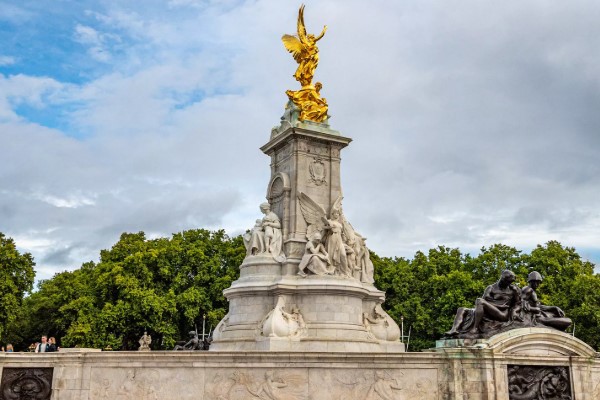
The Queen Victoria Memorial, located in front of Buckingham Palace, is a stunning tribute to one of Britain’s most iconic monarchs. This grand monument, unveiled in 1911, celebrates Queen Victoria’s reign, which lasted over six decades. The memorial features a central statue of the queen herself, elegantly seated and adorned with regal robes. Surrounding her are allegorical figures that represent virtues such as Justice, Truth, and Courage, enhancing the memorial’s grandeur.
The design of the memorial is a blend of artistry and symbolism. Constructed from white Carrara marble, the memorial stands at an impressive height of 25 feet, showcasing intricate carvings and gilded details. The golden statue of Victory, which crowns the monument, adds a striking contrast against the marble, making it a visual focal point. Visitors are often captivated by the craftsmanship and the stories these sculptures tell.
In addition to its artistic merit, the Queen Victoria Memorial serves as a gathering place for celebrations and royal events. It is a popular spot for tourists, offering a perfect view of the iconic Buckingham Palace. The surrounding gardens and fountains create a picturesque backdrop, making it an ideal location for photography and leisurely strolls. The memorial not only honours the queen but also serves as a symbol of national pride.
The Queen Victoria Memorial stands as a testament to the impact of Queen Victoria on British history. It reflects her enduring legacy and the affection the nation holds for her. As visitors engage with the memorial, they are invited to reflect on the queen’s contributions and the era she represents. This sculpture is a magnificent embodiment of London’s rich history and its royal heritage.
Address: Buckingham Palace, London SW1A 1AA.
5- The Monument to the Great Fire of London
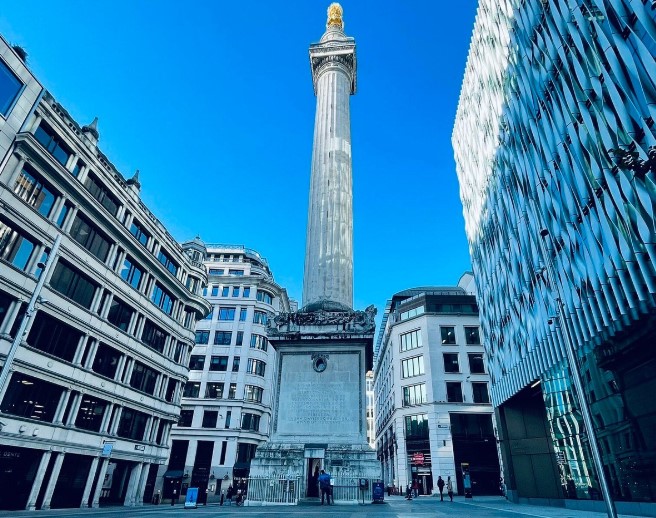
The Monument to the Great Fire of London is a striking column that commemorates a pivotal event in the city’s history. Standing at 202 feet, it is the tallest isolated stone column in the world, a true testament to the resilience of London. The monument was designed by Sir Christopher Wren and Dr. Robert Hooke, and it marks the site where the Great Fire began in 1666. Its impressive height allows it to be seen from various vantage points throughout the city.
Visitors can ascend the 311 steps to the top of the monument for breathtaking views of London. This experience is not only rewarding but also provides a unique perspective on the city’s transformation since the fire. As you climb, you’ll encounter a series of intricate carvings and inscriptions that tell the story of the fire and its impact on London. The monument serves as a reminder of the city’s ability to rebuild and thrive in the face of adversity.
Surrounding the base of the monument, visitors can find detailed bronze reliefs depicting scenes from the Great Fire. These sculptures capture the chaos and destruction that ensued, offering a poignant contrast to the monument’s towering presence. The reliefs invite contemplation and reflection, reminding us of the fragility of urban life and the importance of resilience.
The Monument to the Great Fire of London is more than just a sculpture; it is a symbol of the city’s history and evolution. It stands as a beacon of hope and renewal, representing London’s spirit after devastation. The combination of its historical significance and its architectural beauty makes it a compelling destination for those exploring sculptures in London.
Address: Monument Street, London EC3R 8AH.
6- Sir Winston Churchill statue
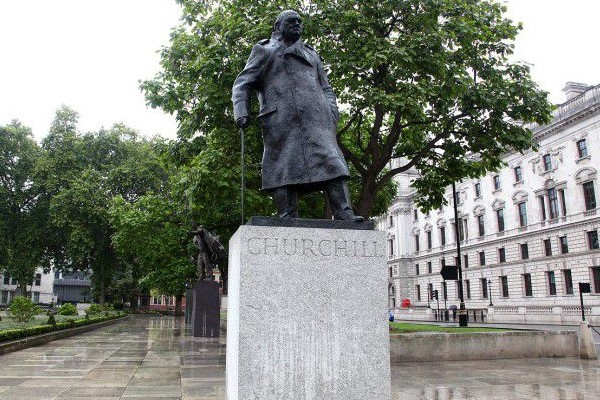
You must visit the iconic Sir Winston Churchill statue, a prominent example of public art in London. Located in Parliament Square, this bronze figure stands as a powerful tribute. It commemorates one of Britain’s most influential leaders. His imposing presence reflects his significant role during the Second World War. The sculptor, Ivor Roberts-Jones, masterfully captured Churchill’s determined expression. You can almost feel the weight of his leadership responsibilities.
The statue’s placement in Parliament Square is significant. It is surrounded by other statues of notable figures. They represent the diverse history of the United Kingdom. Churchill’s statue faces the Houses of Parliament, a poignant detail. This placement underscores his vital connection to British politics. Furthermore, the statue serves as a focal point for gatherings and commemorations.
Roberts-Jones completed the statue in 1973, several years after Churchill’s death. The statue’s unveiling was a momentous occasion. It highlighted Churchill’s enduring impact on the nation. The statue’s features give the impression of the man’s strength. The bronze material also contributes to the statue’s timelessness. The artist has created a lasting tribute.
The Sir Winston Churchill statue attracts visitors from all over the world. The statue has become a popular spot for photographs. The statue’s presence in Parliament Square adds to the historical significance of the area. It is a reminder of Churchill’s leadership and his crucial role in shaping modern Britain.
Address: Parliament Square, London SW1P 3JX.
7- Albert Memorial
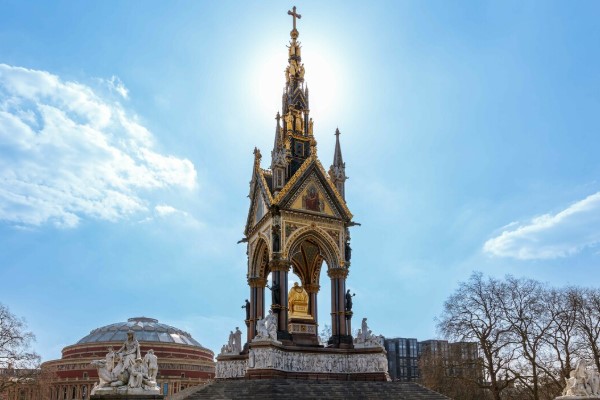
The Albert Memorial is a stunning example of Victorian architecture. It is one of the most elaborate monuments in London. This memorial was commissioned by Queen Victoria in memory of her beloved husband, Prince Albert. The memorial is located in Kensington Gardens, and it is a visual masterpiece. Its intricate design and rich symbolism reflect the era’s artistic sensibilities. The monument is a testament to the Queen’s deep love.
The memorial’s design is complex and multilayered. It consists of several tiers. The base is adorned with relief sculptures, representing various aspects of Albert’s life. Above the base, you will find a towering canopy, supported by columns. The canopy is embellished with mosaics and gilded statues. Also, they represent arts, sciences, and industry. It is a celebration of Prince Albert’s interests. Furthermore, the central figure is a gilded statue of Prince Albert himself. He is holding a catalogue of the Great Exhibition. This is a symbol of his support for innovation.
The memorial’s ornamentation is remarkable. The details are breathtaking. The use of different materials creates a visual contrast. This contrast enhances the memorial’s overall impact. The statues and sculptures are all carefully crafted. They are a reflection of the Victorian era’s artistic prowess. The memorial acts as a time capsule, encapsulating the values and aspirations of a bygone era. The memorial is a tribute to a man of great intellect.
The Albert Memorial has become a popular destination. It attracts tourists and art enthusiasts. The memorial offers visitors a chance to appreciate Victorian craftsmanship. It is a symbol of love and remembrance. It is also an example of artistic excellence. The memorial’s grandeur and intricate design make it a must-see attraction. You can spend hours admiring the details and the craftsmanship.
Address: Kensington Gardens, London W2 4RU.
8- Wellington Arch
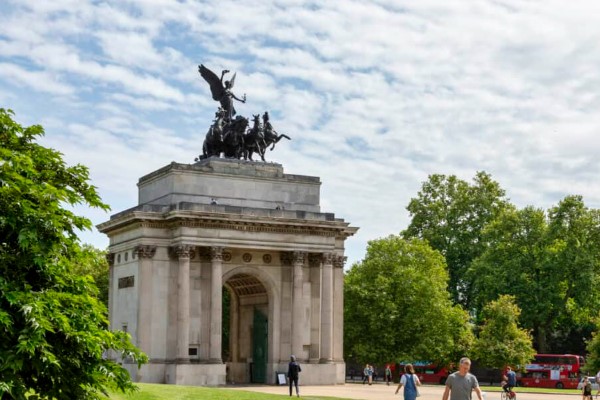
The Wellington Arch is an impressive monument and a significant feature of the statues and monuments in London. Originally designed as an entrance to Buckingham Palace, it now stands at Hyde Park Corner. The arch is a triumphal arch. It commemorates the victories of the Duke of Wellington. He played a crucial role in defeating Napoleon. The arch is a symbol of British military strength.
The arch is made of granite and is a substantial structure. The arch’s design is both functional and decorative. It is topped by a large bronze sculpture. It depicts the Duke of Wellington riding a horse. The sculpture is a commanding presence. It is visible from a distance. The arch’s structure allows for views of the surrounding area. The arch’s location makes it a prominent landmark.
The arch has undergone several transformations over the years. It was moved to its current location in the 19th century. It serves as a gateway to Hyde Park. The arch has been used for various purposes. It served as a police station for a while. The arch is now a visitor attraction. It offers insights into its history.
The Wellington Arch is a testament to British history. The arch is a symbol of victory. It is a reminder of the Duke of Wellington’s contributions. It is a popular spot for tourists. Visitors often stop to admire the arch’s design. The arch’s location at Hyde Park Corner makes it a key landmark.
Address: Hyde Park Corner, London SW1X 7LY.
9- Equestrian Statue of King George III
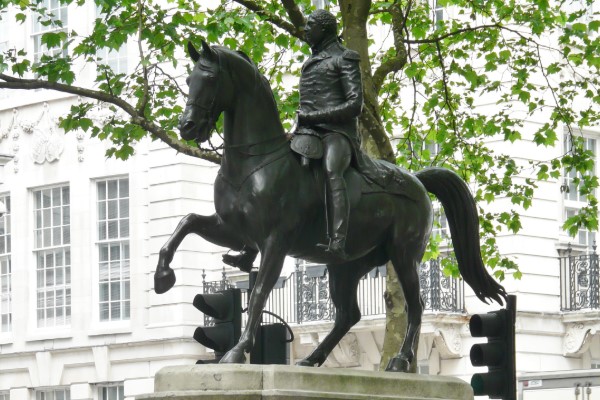
You should consider the magnificent equestrian statue of King George III, which is a stunning example of public art in London. Situated in Pall Mall, this bronze statue is a striking representation of the monarch. It was created by Sir Francis Chantrey. It stands as a testament to the era. The statue provides a glimpse into the history of the United Kingdom.
The statue depicts King George III on horseback. The king is portrayed in royal attire, exuding a sense of authority. The horse is a powerful creature. The artist captured the essence of a regal presence. The statue has an enduring appeal. The statue’s details are expertly crafted. The statue’s placement in Pall Mall is significant. It is surrounded by historic buildings.
The statue’s creation involved meticulous craftsmanship. The bronze material adds to the statue’s sense of permanence. The artist paid close attention to the details. This attention is clear in the king’s facial features. In addition, the statue’s presence in Pall Mall adds to the historic significance of the area. The statue has become a symbol of the monarchy. The statue has also become a popular spot for photographs.
The equestrian statue of King George III attracts a lot of visitors. The statue is a reminder of the monarchy’s influence. The statue is a great example of the many amazing sculptures in London. The statue’s grandeur makes it a memorable attraction.
Address: Pall Mall, London SW1Y 5PD.
10- Animals In War Memorial

The Animals in War Memorial is a poignant tribute. It is a reminder of the animals who served in times of conflict. The memorial is located in Park Lane. It is a touching example of the statues and monuments in London. The memorial pays homage to the animals that contributed to the war efforts. In addition, it is a symbol of respect.
The memorial consists of a bronze sculpture. It depicts various animals, including horses, dogs, and mules. They are all in a state of distress. Also, the animals are all depicted in a realistic manner. The artist has captured the animals’ suffering. The memorial highlights the animals’ bravery. It also pays tribute to their sacrifices. The memorial’s presence in Park Lane is significant.
On the other hand, the memorial’s design is moving and thought-provoking. Moreover, the use of bronze adds to the memorial’s solemnity. The animals are depicted with a sense of realism. The memorial’s details are remarkable. The memorial serves as a reminder of the animals’ contributions. It is a reminder of the animals’ courage. The memorial is a testament to the animals’ resilience.
The Animals in War Memorial attracts visitors from all over the world. Visitors come to pay their respects. The memorial is a popular spot for reflection. The memorial also encourages people to think about the role of animals in war. The memorial’s presence in Park Lane makes it a powerful statement.
Address: Park Ln, London W1K 1QT.
Faq’s
What makes sculptures in London unique?
Sculptures in London stand out due to their rich historical and cultural significance. The city blends classical and contemporary styles, offering visitors a wide range of artistic expressions. These pieces often reflect the social, political, or historical context of the time they were created, making them more than just decorative features. Their presence throughout parks, streets, and public spaces adds to the city’s distinctive charm.
Where can I find the most famous sculptures in London?
Many of the most well-known sculptures in London are displayed in public places, museums, and dedicated sculpture parks. From bustling city squares to serene green spaces, these works are also spread across various locations, allowing people to enjoy art outside traditional gallery settings. Some are part of rotating exhibitions. On the other hand, others have become permanent landmarks.
Why are sculptures in London considered important for cultural tourism?
Sculptures in London play a key role in attracting cultural tourists who seek more than just sightseeing. They offer a chance to explore history, identity, and artistic trends through a physical medium. These artworks often spark curiosity and, also, conversation, encouraging visitors to learn more about the city’s heritage and contemporary voice. Their accessibility makes them ideal for travellers interested in immersive cultural experiences.
Are there guided tours for exploring sculptures in London?
Yes, there are several guided tours available that focus on sculptures in London. These tours often provide historical context, artist insights, and the significance behind each piece. In addition, they can be walking tours or part of broader art experiences, helping participants engage more deeply with the artwork. Such tours are perfect for art lovers and history enthusiasts alike.
How do sculptures in London reflect the city’s diversity?
Sculptures in London showcase the city’s diverse voices and multicultural heritage. Artists from various backgrounds have contributed pieces that speak to a wide range of experiences and identities. Also, this diversity is reflected in the themes, materials, and styles used, creating a rich and inclusive visual landscape. On the other hand, these works often highlight social issues, historical figures, or cultural narratives that matter to London’s communities.